
- English
- Español
- Português
- русский
- Français
- 日本語
- Deutsch
- tiếng Việt
- Italiano
- Nederlands
- ภาษาไทย
- Polski
- 한국어
- Svenska
- magyar
- Malay
- বাংলা ভাষার
- Dansk
- Suomi
- हिन्दी
- Pilipino
- Türkçe
- Gaeilge
- العربية
- Indonesia
- Norsk
- تمل
- český
- ελληνικά
- український
- Javanese
- فارسی
- தமிழ்
- తెలుగు
- नेपाली
- Burmese
- български
- ລາວ
- Latine
- Қазақша
- Euskal
- Azərbaycan
- Slovenský jazyk
- Македонски
- Lietuvos
- Eesti Keel
- Română
- Slovenski
- मराठी
- Srpski језик
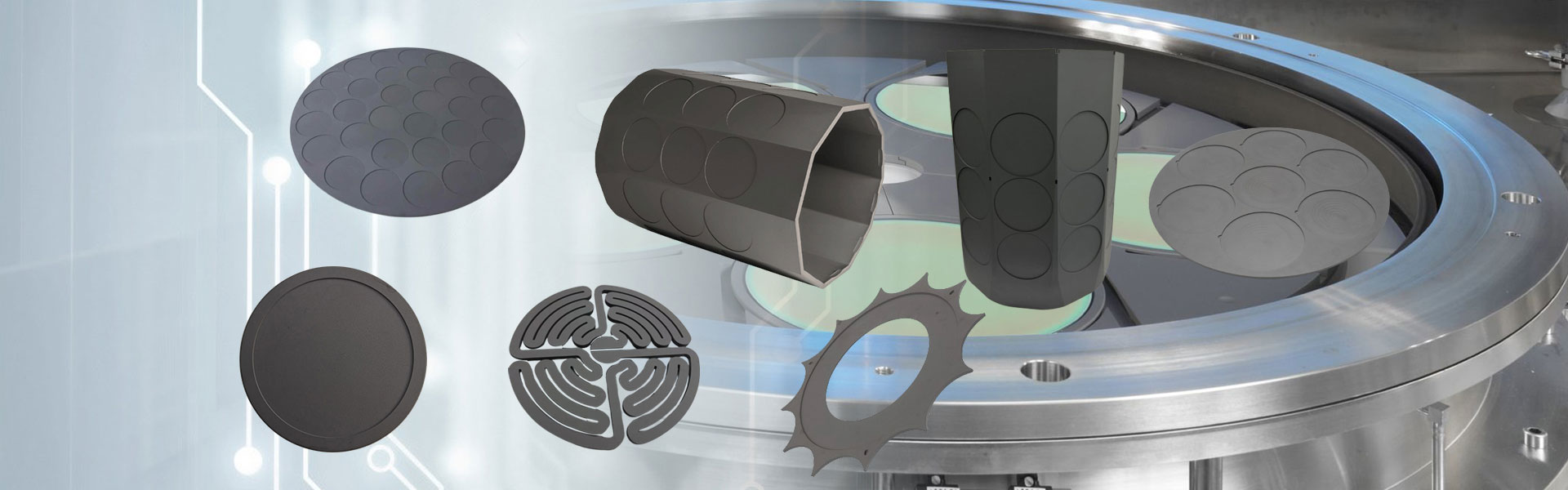
Кина Изостатски графит Мануфацтурерс, Супплиерс, Фацтори
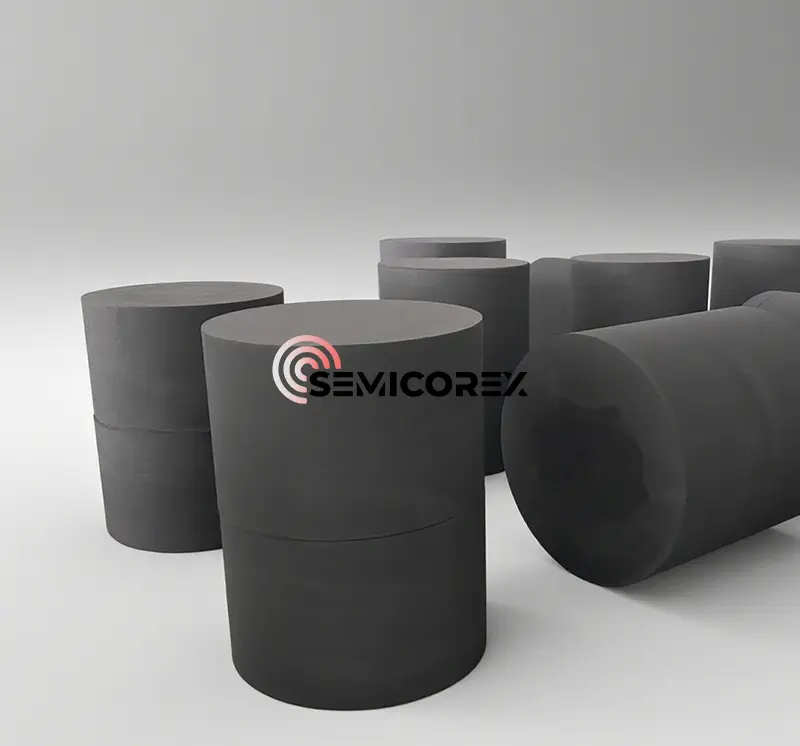
Carbon/graphite material molding essentially involves increasing the density of the powder mixture and ensuring close contact between the aggregate and binder to produce a green body with a desired size, morphology, and minimal machining allowance. The four main molding methods are extrusion, compression molding, vibration molding, and isostatic pressing. Common carbon/graphite materials on the market (for example, charcoal used for household fires) are mostly formed using hot extrusion and compression molding (cold or hot). Isostatic pressing offers superior molding performance.
The principle of isostatic pressing is based on Pascal's law: pressure applied to a medium (liquid or gas) in a sealed container is uniformly distributed in all directions, with the pressure on the surface being proportional to the surface area. Isostatic pressing involves placing a sample, enclosed in a sealed container, within a high-pressure cylinder. Leveraging the incompressible nature of the liquid medium and its ability to uniformly transmit pressure, the sample is uniformly pressed from all directions. When the fluid is injected into the cylinder, the pressure is evenly transmitted in all directions according to the principles of fluid mechanics. The sample in the cylinder is then subjected to uniform pressure in all directions.
Due to the isostatic pressing method, isostatically pressed graphite exhibits excellent isotropy, with properties independent of shape, size, or sampling direction. The material possesses a dense microstructure, high mechanical strength, high surface hardness, and oxidation resistance. Strong performance and high-temperature resistance; the material has excellent thermal shock resistance and is less susceptible to cracking under rapid cooling and heating conditions.
1. Isotropy
Different molding methods result in different properties in different directions. This is primarily reflected in resistivity, thermal conductivity, mechanical properties, and thermal expansion coefficient. The general measurement method is to sample the product perpendicular to and horizontally from the pressure surface, measure the properties separately, and then divide the smallest value by the largest value to obtain the isotropy ratio.
Traditional carbon/graphite products exhibit significant anisotropy, i.e., the properties of the product are different in the directions perpendicular to and horizontal to the pressure surface. The corresponding difference in performance is generally greater than 1:1.1, hence the term anisotropy. In many cases, this difference is fully exploited, and the greater the difference, the better. Examples include graphite electrodes for steelmaking and brushes for motors. Many applications, such as EDM and single-crystal silicon thermal field applications, increasingly require carbon/graphite products to exhibit isotropy (with an orientation ratio within the 1:1.05 range).
2. Large Dimensions
The market is increasingly demanding larger product sizes. For example, single-crystal silicon products have grown from 6- and 8-inch sizes to 12-inch sizes. The size of graphite materials used in thermal fields is also increasing. This is also increasing. Similar trends are seen in other related industries. Graphite for EDM, continuous casting, and nuclear reactors also requires large-scale products. This is difficult to achieve using molding and extrusion methods. The primary problem with large-scale product production is calcination cracking, and the larger the product, the higher the chance of calcination cracking.
3. Fine Structure
As a structural material, it requires high physical and chemical properties. On the one hand, the finer the particle size of the carbon particles that make up the carbon/graphite material, the denser its texture and the higher its mechanical strength.
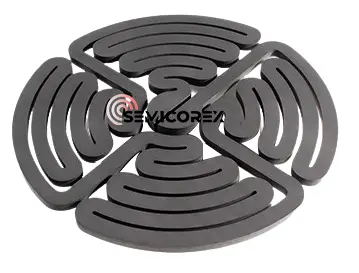
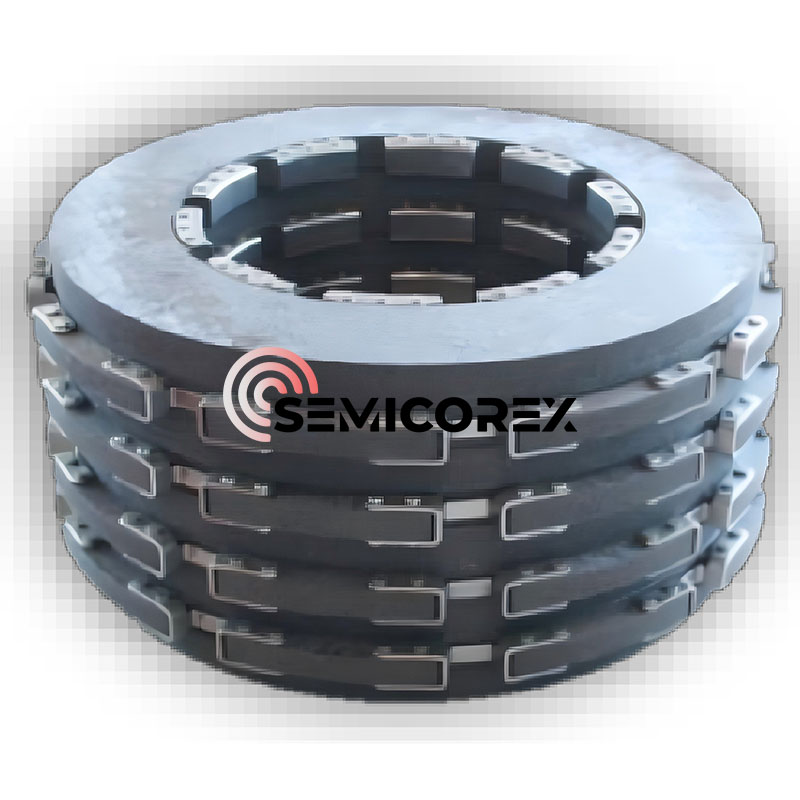
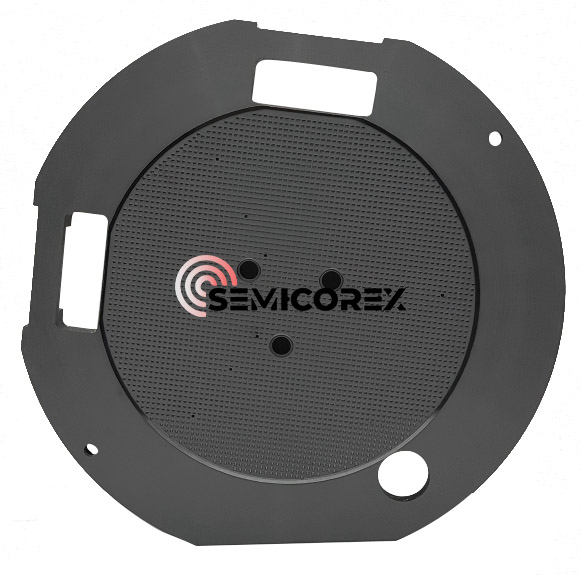
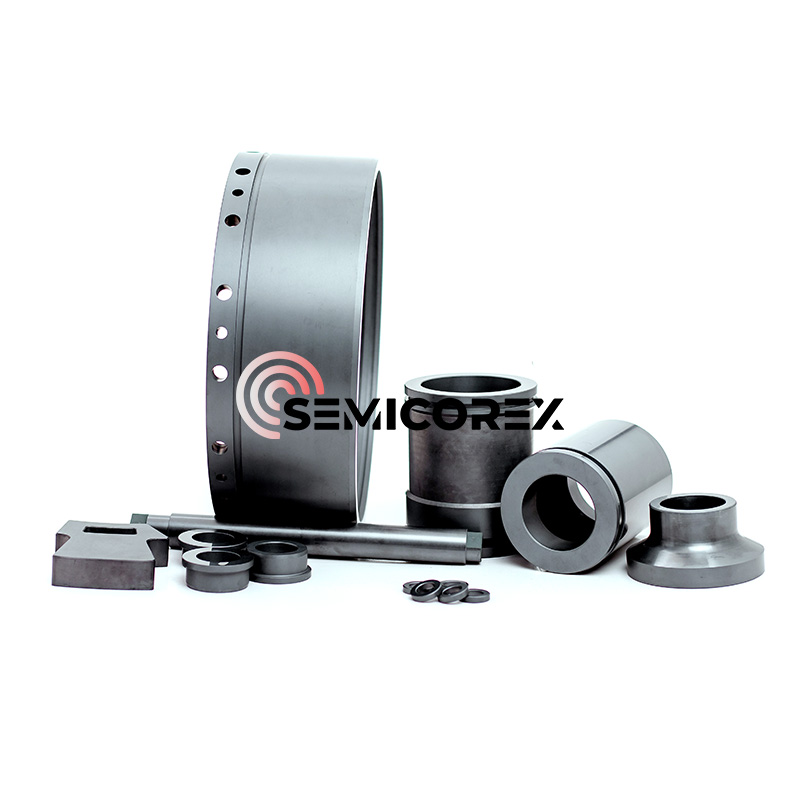
Isostatically pressed graphite is widely used in semiconductor manufacturing processes. It is used in graphite components for the hot zone of single crystal growth furnaces, such as crucibles, heaters, flow guides, and insulation covers; and in graphite components used in epitaxial processes.
- View as
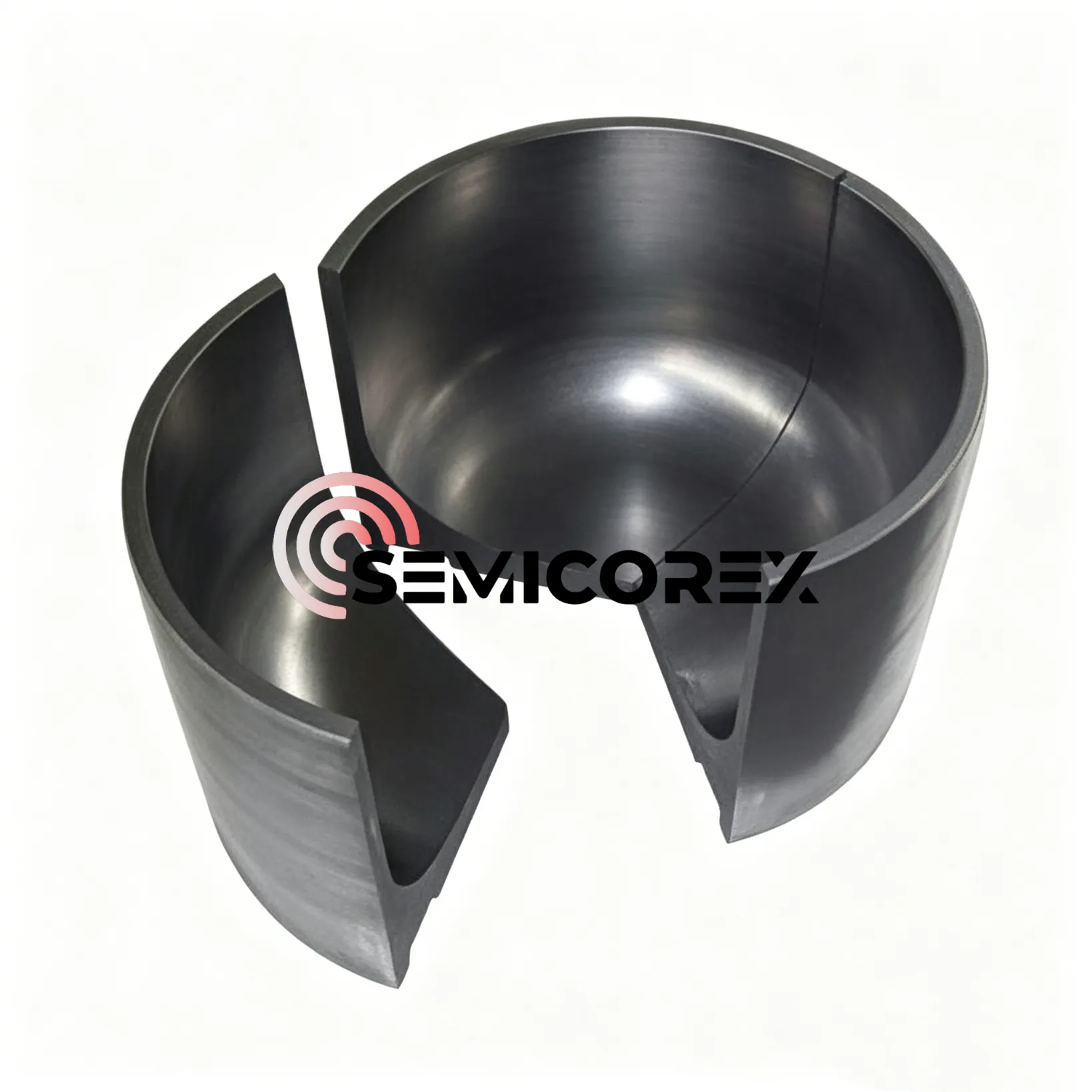
Графитне лонце од три комада
Семицорек троделни графитни лончићи су контејнери од подељеног графита високих перформанси специјално пројектовани за процесе раста монокристалног силицијума. Идеалан за висококвалитетну термичку обраду полупроводника, Семицорек троделни графитни лончић може поуздано да подржи кварцни лончић и његове унутрашње материјале како би се постигао контролисан раст монокристалних структура.
ОпширнијеПошаљи упит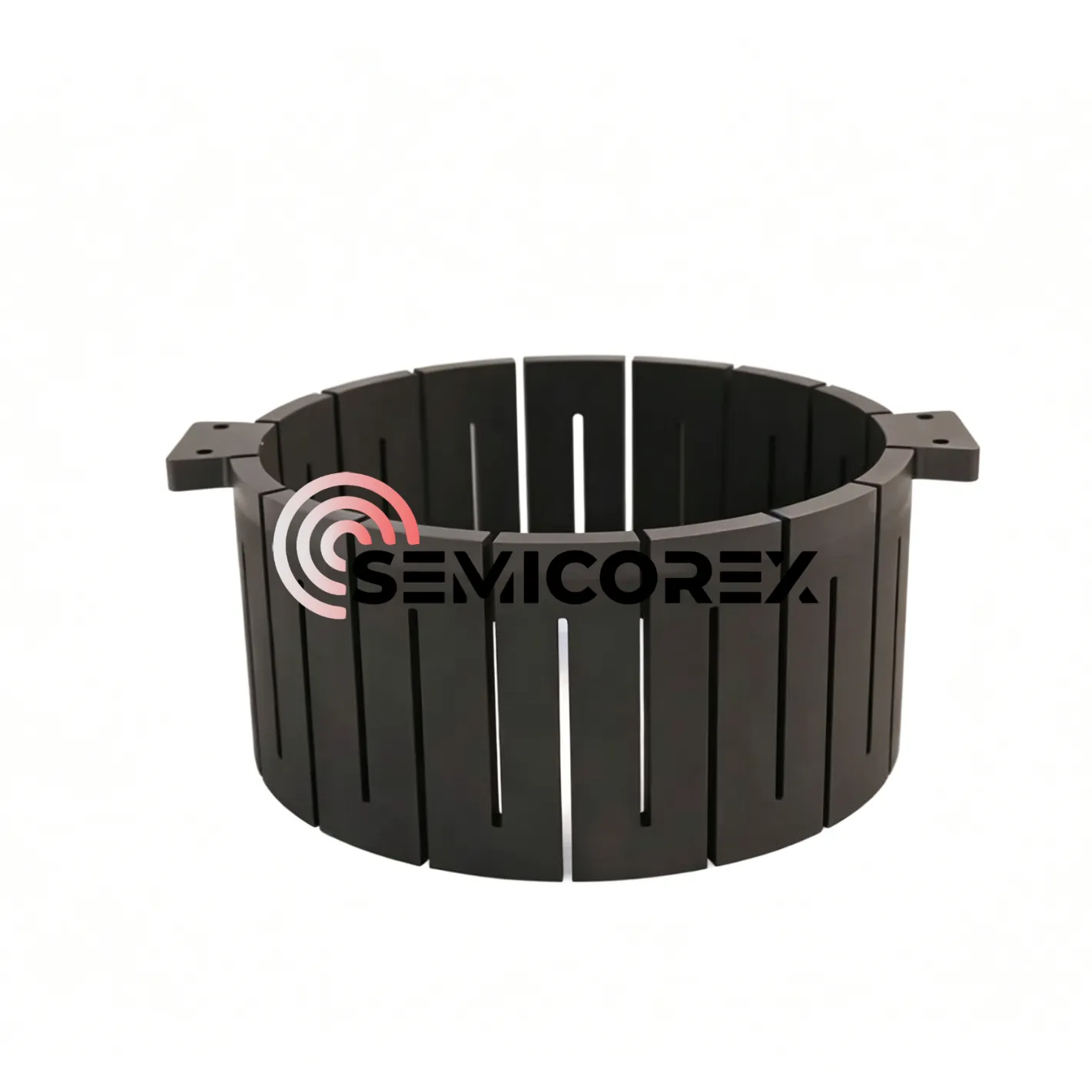
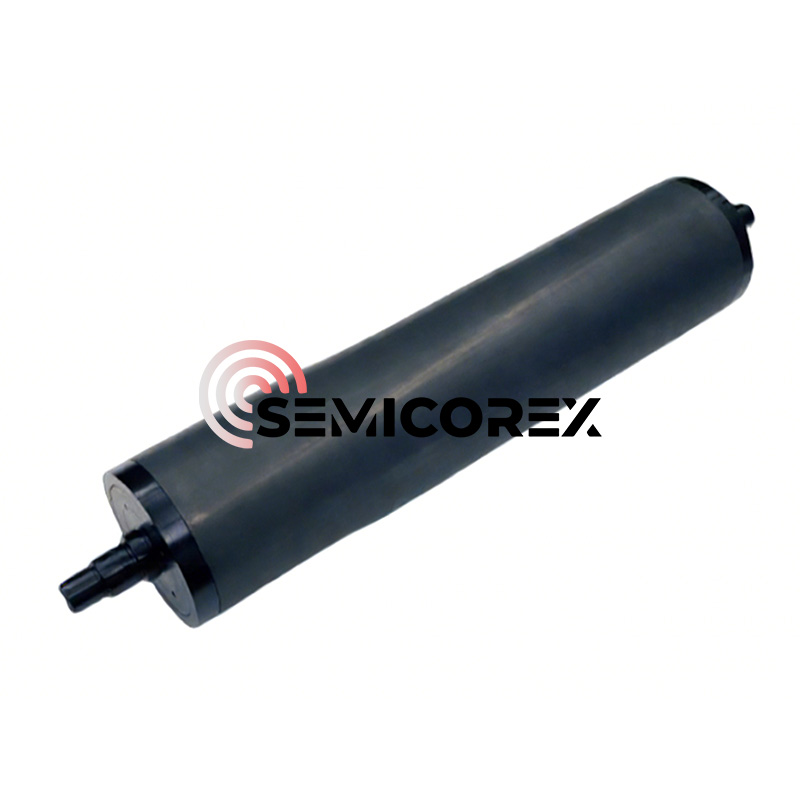
Графитни грејачи типа рукава
Семицорек графитни грејачи у облику рукава, високоефикасни грејни елементи, који се широко користе у пећима за раст од једног кристала. Семицорек графитни грејачи са рукавима су кључне компоненте за грејање које се интензивно користе у пећима са монокристалом, пројектоване посебно за висококвалитетни раст монокристалног силицијума. Избор Семицорек-а је избор идеалних решења за третман грејања.
ОпширнијеПошаљи упит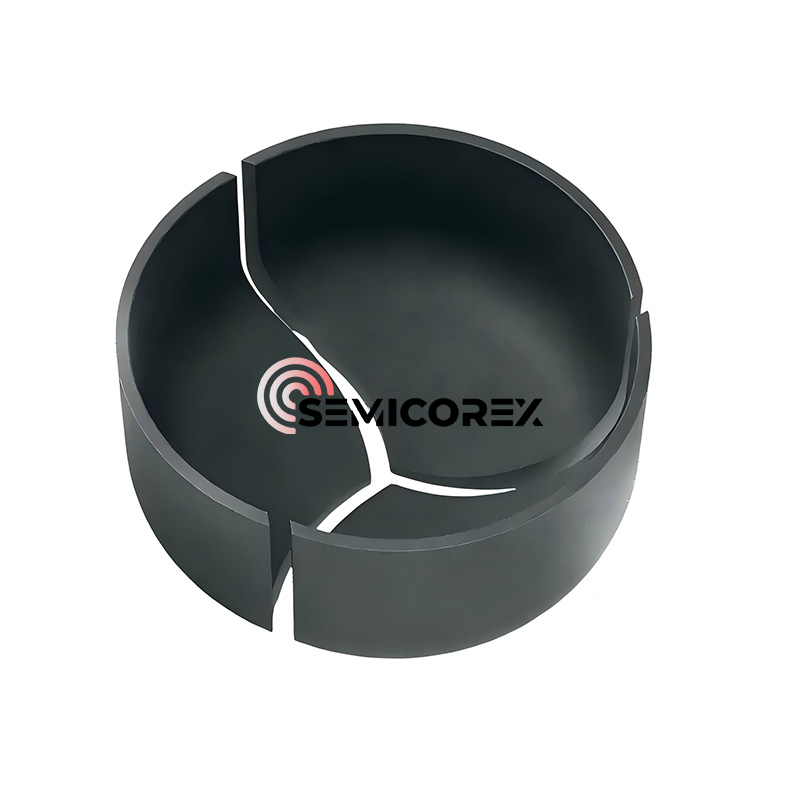
Графитни лончић са три латице
Семицорек графитни лончићи високе чистоће са три латице имају иновативну архитектуру за ублажавање стреса дизајнирану да максимизира приносе раста кристала у екстремним полупроводничким термичким окружењима. Семицорек испоручује решења за полупроводничке материјале светске класе широм света, оснажујући напредне индустрије са прецизно пројектованим графитним и керамичким компонентама које подржава поуздана глобална логистика.*
ОпширнијеПошаљи упит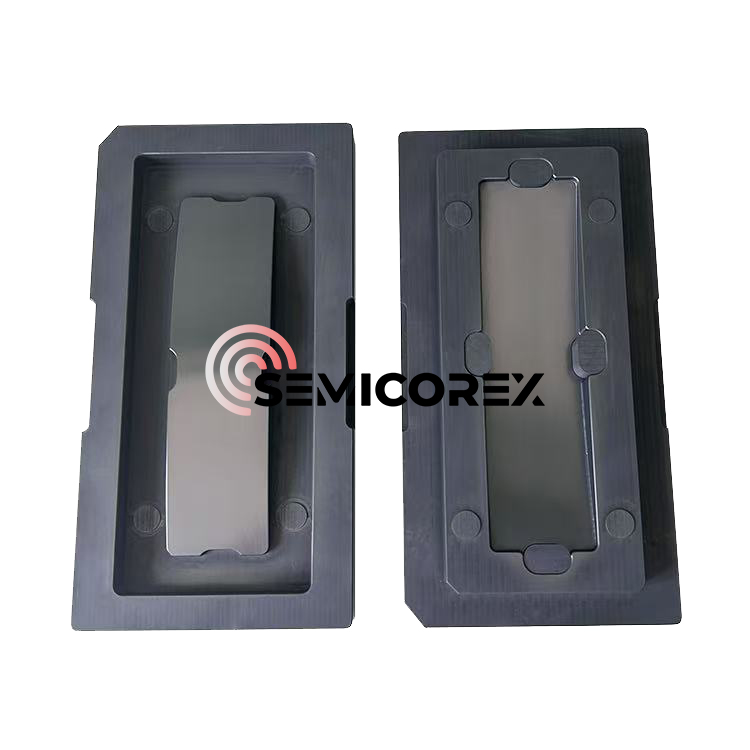
Топло савијени стаклени графитни калуп
Семицорек топло савијени стаклени графитни калуп је прецизно конструисан од финозрнастог графита високе чистоће да обезбеди изузетну отпорност на високе температуре, стабилност термичког удара, самоподмазивање и хемијску издржљивост, обезбеђујући висококвалитетно 3Д закривљено стакло са минималним дефектима. Семицорек је изабран због своје дубоке стручности, напредног дизајна калупа и педантне контроле процеса, ефикасно максимизирајући принос и испуњавајући најзахтевније захтеве производње.*
ОпширнијеПошаљи упит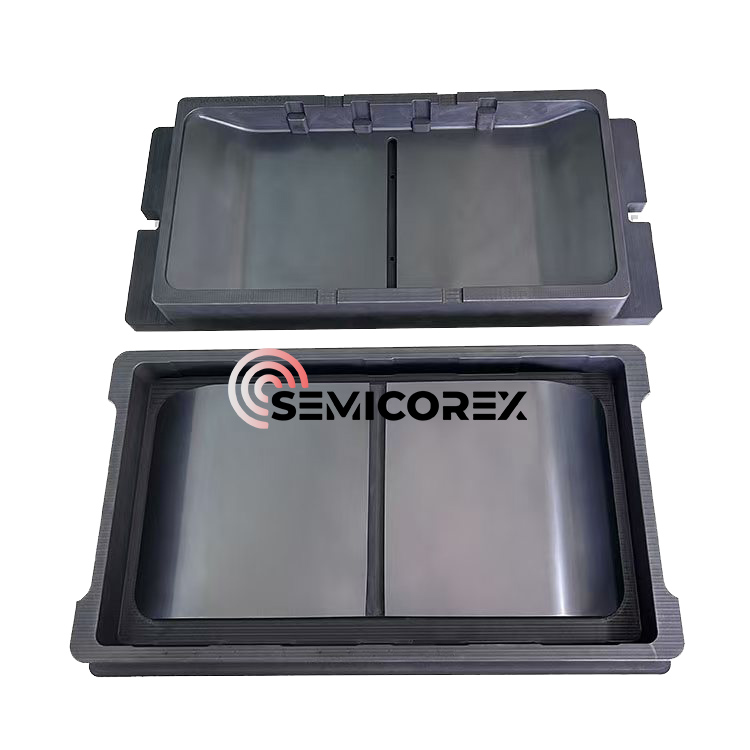
3Д стаклени графитни калуп за вруће савијање
Семицорек 3Д стаклени графитни калуп за вруће савијање је врхунски изостатски графитни калуп дизајниран за топло савијање 3Д закривљеног стакла, који нуди одличну термичку стабилност, топлотну проводљивост, отпорност на хабање и корозију, побољшава квалитет стаклене површине, продужава век трајања калупа и значајно повећава ефикасност производње и принос. Семицорек је изабран због свог поузданог квалитета, доследне понуде и стручности у пружању напредних решења за графит широм света.*
ОпширнијеПошаљи упит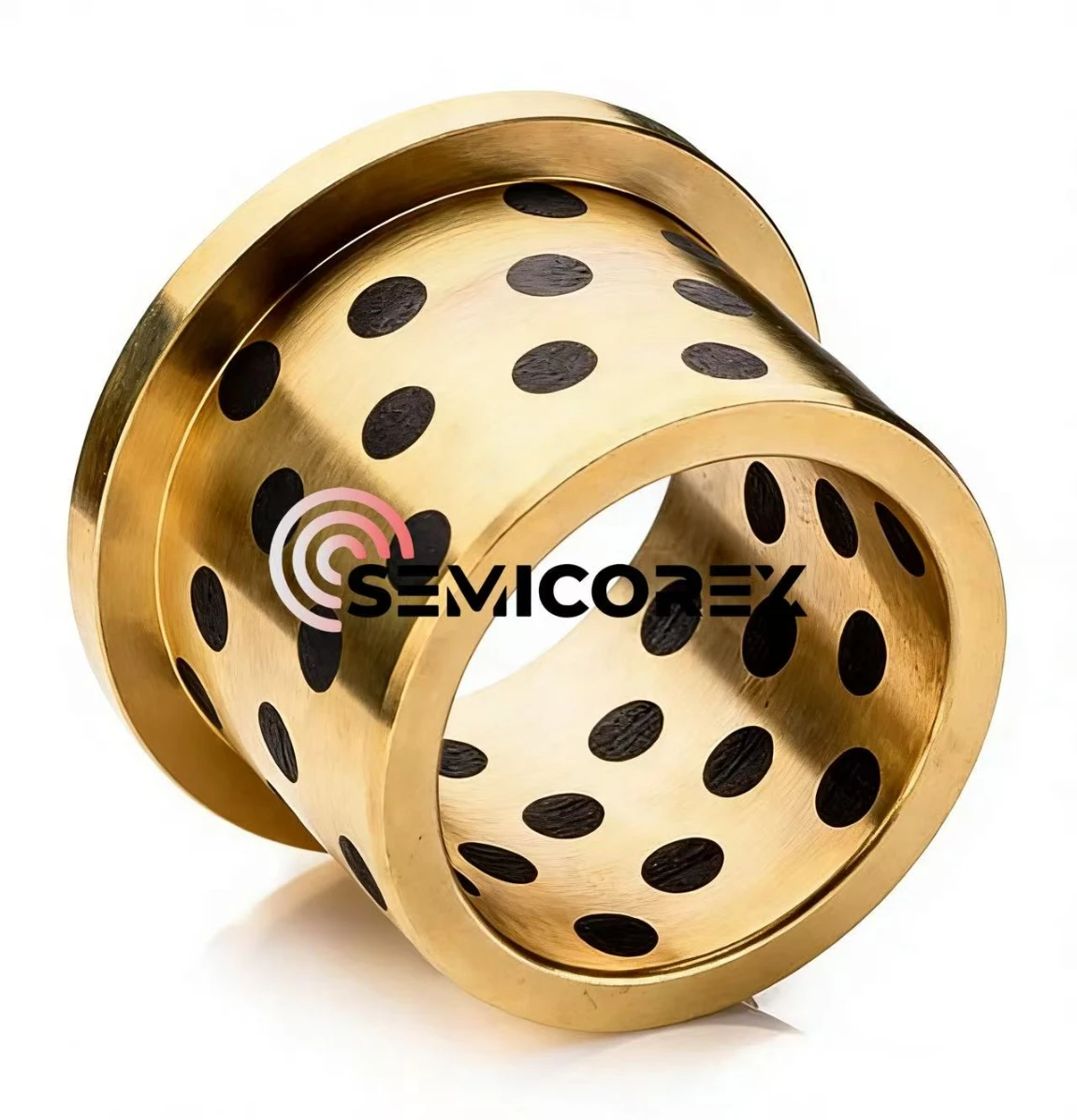
Графитне самоподмазиве чауре
Семицорек графитне самоподмазиве чауре, које се називају и чауре без уља, су компоненте клизних лежајева високих перформанси дизајниране специјално за рад без спољног подмазивања или довода уља. Са одличним перформансама, Семицорек графитне самоподмазиве чауре су идеално решење за опрему која ради у сложеним окружењима, укључујући рад без уља, високе температуре, велика оптерећења, ниске брзине, анти-обраштање, отпорност на корозију и отпорност на зрачење.
ОпширнијеПошаљи упит
Семицорек производи Изостатски графит дуги низ година и један је од професионалних Изостатски графит произвођача и добављача у Кини. Једном када купите наше напредне и издржљиве производе који испоручују расуто паковање, гарантујемо велику количину брзе испоруке. Током година, клијентима смо пружали прилагођену услугу. Купци су задовољни нашим производима и одличном услугом. Искрено се радујемо што ћемо постати Ваш поуздан дугорочни пословни партнер! Добродошли у куповину производа из наше фабрике.